
Featured Published 20 November 2026 · 8 min read
Before the Next HPV Campaign, Test the System Behind It
Fifteen countries introduced the HPV vaccine in 2025, yet global coverage rose only modestly. The vaccine is not the problem. The system behind it is.
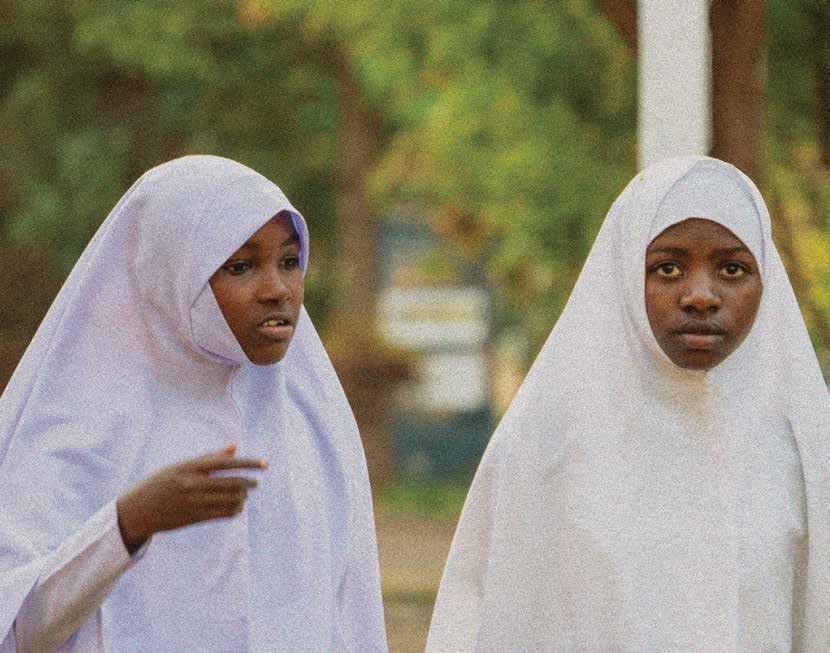
Last year, fifteen countries introduced the HPV vaccine into their national programs, bringing the total to 162.1 On paper, it should have been a breakthrough year for cervical cancer prevention. It was not quite. According to the latest WHO and UNICEF estimates, global first-dose coverage among girls rose only modestly, from 31% in 2024 to 33% in 2025.2 Part of that reflects data still to come from new introductions. Part reflects something more troubling: gains from new programs were offset by weaker performance in some large countries that had introduced the vaccine years earlier.3
The longer trend is still encouraging. Coverage has nearly doubled since 2019, and in lower-income countries supported by Gavi it has risen from under 5% to 29%.4 But the money behind that progress is tightening: Gavi’s 2025 replenishment raised roughly $9 billion against an $11.9 billion target, in part because the United States halted its funding, releasing $600 million in previously appropriated funds only this July.5 With two in three girls aged 9 to 14 still unvaccinated, and a global target of 90% fully vaccinated by age 15 by 2030, the question is shifting from whether a country can run a campaign to whether it can keep delivering without one.6 Coverage figures alone cannot answer that.
The world has committed to eliminating cervical cancer (the first cancer it has ever set out to end).7 Nowhere are the stakes higher than in sub-Saharan Africa, where incidence in 2023 stood at 55.9 cases per 100,000: two to four times global rates, and far above the elimination threshold of four.8
Introductions make headlines. Second and third years rarely do. Yet it is in those quieter years (the ones without launch events, ministerial speeches or donor photographs) that elimination will be won or lost.
Why campaign coverage does not repeat itself
Consider Nepal. In February 2025, it vaccinated 1.46 million girls in fifteen days, reaching 94% administrative coverage: a remarkable feat of coordination, and one worth celebrating.9 Yet the country’s own post-introduction evaluation found that compressed timelines had left private schools and subnational teams underprepared, and that out-of-school girls remained hard to reach.10 The campaign worked. Whether the system behind it will is another question.
The mechanics explain why. A multi-age catch-up campaign reaches several years of girls at once (in Nepal, grades 6 to 10, plus out-of-school girls aged 10 to 14). After that, a single new cohort becomes eligible each year (in Nepal, girls entering grade 6), and it must be reached through routine delivery: no campaign budget, no national spotlight, no army of volunteers.11 WHO’s 2022 endorsement of a single-dose schedule means one contact per girl rather than two, but it also concentrates the risk on that one contact.12 A girl missed in her cohort year can still be vaccinated while she remains eligible, but only if the system knows she was missed and goes back for her. Where registers are weak and follow-up is unfunded, a missed girl tends to stay missed.
In other words, a country can post excellent numbers in a well-funded year and still have no reliable way to repeat them.
Conceptual illustration of observed patterns; not empirical data for any single country. Haskè Conseil.
One vaccine, five tests
HPV vaccination offers a clear test of whether wins can be replicated, because delivering it through schools probes nearly every joint of a school health system at once. A program has to find every eligible girl by class and age; align two ministries, which do not always speak to each other, on one calendar; secure consent on a sensitive subject; pay for transport and cold chain and revisits; and then go looking for the girls who were absent, or never enrolled at all. Where any one of these is weak, it shows, and the weakness carries over to every adolescent service that relies on the same platform, from deworming to mental health. The vaccine does not build the system. It reveals it.
- The demand: Find every eligible girl, by class and ageWhat it tests: Accurate, shared registersDimension: Data and learning
- The demand: Align two ministries on one calendarWhat it tests: A joint mandate with defined rolesDimension: Governance
- The demand: Secure informed consent on a sensitive topicWhat it tests: Teachers that parents trustDimension: Delivery
- The demand: Fund transport, cold chain and revisitsWhat it tests: Recurrent operating budgetsDimension: Financing
- The demand: Reach girls who are absent or out of schoolWhat it tests: Follow-up beyond the classroomDimension: Equity and access
Haskè Conseil analytical framework
A test in five dimensions
Our recent analysis of school health programs in seven countries, across Africa, Asia and the Middle East, points to a way of telling the difference.13 We propose testing school health systems across five dimensions. Each can be observed, documented and compared, and each, in its own way, comes down to a deceptively simple question.
Governance asks whether school health rests on law or on goodwill. Where a legal mandate sets out what the ministries of health and education each owe the program, delivery can survive a vaccine scare, a change of minister or a lean budget year. Where it rests on goodwill, it tends to hold, right up until it is tested.
Then there is delivery, and with it the question of who actually runs vaccination day. Class lists, consent forms, the choreography of moving a school’s worth of adolescents through a hall: these are administrative tasks, and teachers are far better placed to own them than visiting health teams. Teachers are the spine of school-based delivery, not its support act.
Financing is where good intentions most often stall. Vaccine procurement is the most visible line in any budget, and it is seldom the one that breaks. The costs that do break (transport, supervision, follow-up) are recurrent, unglamorous and, too often, paid for by someone else.
Equity and access turns on a blunt question: does reach depend on institutions, or on where projects happen to operate? When money flows through education systems, coverage follows enrollment. When it flows around them, coverage follows the project map, and the rural, the poor and the out-of-school are missed first.
Finally, data and learning. Do schools and districts own the numbers they produce, and do those numbers arrive in time to act on? A complete report that lands after the school term has moved on informs the record, but not the response. Even strong systems wrestle with the numbers: in Tanzania, administrative HPV coverage reached about 107% in 2024, because girls vaccinated across several age groups were counted against a denominator of nine-year-olds alone.14
Each dimension is then examined across four layers of the system, from national mandate to school operations, producing a twenty-cell map rather than a score. The table below shows what success looks like at each layer, and where systems most often break.
| Layer of the system | What success looks like | Where it typically breaks |
|---|---|---|
| National mandate | A joint health–education instrument, with named roles and budget lines for delivery. | Mandate without money: policy authorizes school delivery, but no operational budget follows, so delivery stops when partner funding does. |
| Coordination structures | One calendar, one register and one reporting line across health and education. | Data that arrives too late: parallel reporting identifies missed girls after the term has moved on. |
| District authority | Districts budget for transport and follow-up, and can authorize revisits. | Reach that follows funding: accessible districts do well, while remote and out-of-school girls are missed first. |
| School operations | A trained teacher focal point owns class lists, consent and vaccination-day logistics. | Teachers on the margins: the school becomes a venue rather than a system (a hall, some chairs, a queue). |
None of these failures is, at heart, a technical problem. Each is a question of who holds authority, who pays, and who answers for delivery where it actually happens.
The strongest systems close these gaps by design. Since Tanzania folded HPV vaccination into its national school health and nutrition program in 2018, coverage has stayed above 90%. Districts are tiered by past performance and geographic barriers, and when coverage drops mid-round, immunization registry data can trigger the reallocation of fuel or per diem budgets within 48 hours.15 That is what district authority looks like when it is real: not a plan on paper, but money that moves while the round is still underway.
Six things to measure
None of this requires a new survey. Six measures, most of them already held by governments, can tell a ministry where it stands: mandate (whether a joint health–education instrument is in force), teacher roles (the share of schools with a trained health focal teacher), domestic financing (the share of delivery operating costs met from public budgets), reach (the share of identified out-of-school girls followed up within the school year), timeliness (the median days between a vaccination session and data visibility at district level) and stability (how much coverage varies across three consecutive cohorts). Tracked together, they answer the question that matters most: is a government building a system, or financing a series of events?
What governments and funders can do
For governments, the most valuable steps are rarely the most visible. A joint mandate between health and education costs little money, though often considerable political capital. A protected district budget line turns lists of missed girls into completed visits. And a trained teacher focal point in every school gives delivery a backbone that does not pack up and leave with the campaign.
For funders, the shift is one of emphasis, not direction. Campaigns remain essential for introductions and catch-up. But support that pays indefinitely for recurrent functions (transport, allowances, data clerks) can quietly delay the very ownership it is meant to build. Financing the transition, and asking system questions before funding the next campaign, is far more likely to leave something standing.
Nepal shows that campaigns and systems need not be opposites. Its 2025 drive was followed by the integration of HPV into the routine immunization schedule, precisely the right instinct.16 The test now is whether the coordination built in those fifteen days becomes, quietly and unremarkably, the way things are done every year.
Elimination will not be won in a single campaign, however impressive. The most useful question any ministry or funder can ask is not how many girls were reached this year, but whether the system will reach the next cohort, and the one after that, and the one after that.
References
- WHO, Immunization coverage (fact sheet), 2026. ↩
- WHO, Immunization coverage (fact sheet), 2025; WHO, Immunization coverage (fact sheet), 2026. ↩
- WHO and UNICEF, Progress and challenges with achieving universal immunization coverage, 2026; WHO, Immunization coverage (fact sheet), 2026. ↩
- WHO, Immunization coverage (fact sheet), 2026; Gavi, The state of global immunisation in eight charts, 2026; Gavi, Human papillomavirus vaccine support, 2026. ↩
- Devex, Gavi pledges fall short about $2.9B as US pulls out, 2025; KFF, The Trump Administration’s Foreign Aid Review: Status of U.S. Support for Gavi, the Vaccine Alliance, 2026. ↩
- WHO and UNICEF, Progress and challenges with achieving universal immunization coverage, 2026; WHO, Global strategy to accelerate the elimination of cervical cancer as a public health problem, 2020. ↩
- WHO, A cervical cancer-free future: First-ever global commitment to eliminate a cancer, 2020. ↩
- Persistent and divergent cervical cancer burden in Sub-Saharan Africa, 1990–2023, Journal of Clinical Oncology, 2026; WHO, Global strategy to accelerate the elimination of cervical cancer as a public health problem, 2020. ↩
- WHO Nepal, Nepal vaccinates over 1.46 million girls with the HPV vaccine, 2025. ↩
- WHO South-East Asia Regional Office, Post Introduction Evaluation of HPV & TCV Vaccination in Nepal December 2025, 2026. ↩
- WHO Nepal, Nepal vaccinates over 1.46 million girls with the HPV vaccine, 2025. ↩
- WHO, Human papillomavirus vaccines: WHO position paper (2022 update), Weekly Epidemiological Record, 2022. ↩
- Haskè Conseil, The Operational Effectiveness of School Health Programs: Cross-Country Analysis, 2026. ↩
- Haskè Conseil, School-Based HPV Vaccine Delivery: Tanzania Case Study, 2026. ↩
- Haskè Conseil, School-Based HPV Vaccine Delivery: Tanzania Case Study, 2026. ↩
- WHO Nepal, Nepal vaccinates over 1.46 million girls with the HPV vaccine, 2025. ↩